The Wounded Body
Medicine
The wound healing process
Wound healing is usually described as four overlapping phases. The body moves through these stages in sequence, but the timing can vary depending on the type of wound, infection risk, and overall health.
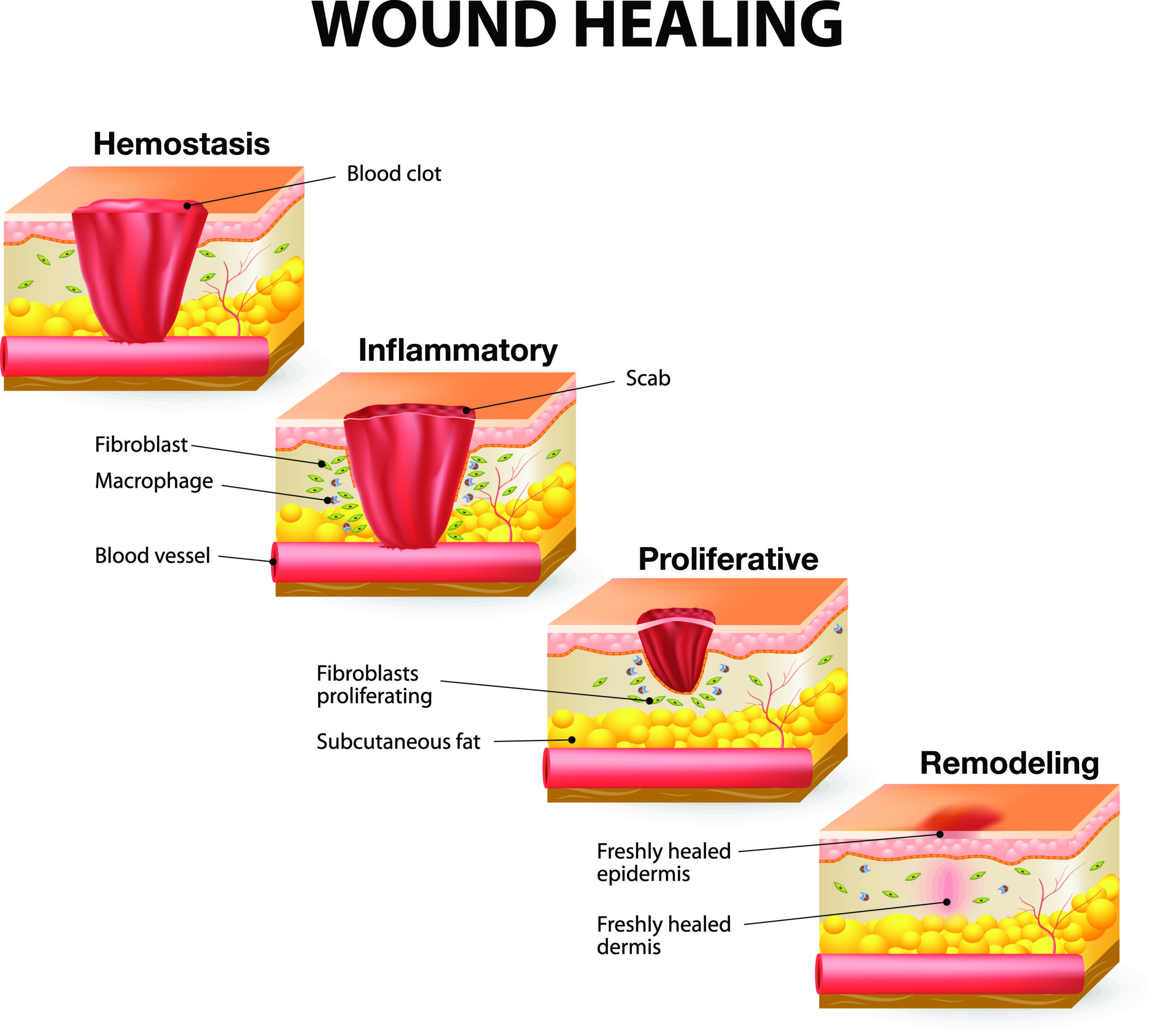
1) Hemostasis
Immediately after injury, the body works to stop bleeding. Blood vessels
constrict, platelets gather, and a clot forms to seal the wound and create
a temporary base for repair.
2) Inflammation
In the days that follow, immune cells enter the area to clear bacteria and
damaged tissue. Redness, warmth, swelling, and tenderness can be normal
signs of this phase.
3) Proliferation
New tissue begins to build. Skin cells move across the surface, fibroblasts
support collagen production, new blood vessels form, and the wound gradually
shrinks as the edges pull together.
4) Remodeling
Over weeks to months (sometimes longer), collagen reorganizes and strengthens.
The wound continues to contract, and the scar tissue becomes more stable.
Your role in the process
Healing is mostly automatic, but care matters: keep the wound clean, follow
instructions for dressings, avoid picking/scratching, attend follow-ups, eat
well (especially enough protein and fluids), and contact a provider if you
notice signs of infection (worsening pain, pus, bad odor, fever/chills).
See also: Pain, Dermographism, Trauma.
Sources: Essentia Health — The 4 stages of wound healing; NCBI Bookshelf — Principles of Wound Healing; UF Health — Skin and wound healing; Shield HealthCare — Stages of Healing image.

Dermographism
Dermographism (also called dermatographia or “skin writing”) is a common, benign skin condition where light scratching, rubbing, or pressure can cause raised, itchy lines or welts. The reaction often appears quickly and usually fades on its own within a short time.
People experience it differently: for some, it’s occasional and mild; for others, itching can be persistent or distracting. Triggers can include friction from clothing, scratching, pressure, heat, stress, or dry skin.
Treatment isn’t always necessary. If symptoms are bothersome, over-the-counter antihistamines are commonly used to reduce itching and reactivity. Avoiding triggers (gentle skin care, reducing friction, not scratching) can also help.
See also: Pain, Masochism, Hysteria.

Sources: Cleveland Clinic — Dermatographia/Dermatographism; Mayo Clinic — Dermatographia (diagnosis & treatment); NCBI Bookshelf (StatPearls) — Dermatographism.